INDUSTRY NEWS
How to prepare the bess energy storage system production plant and get support from China EPC
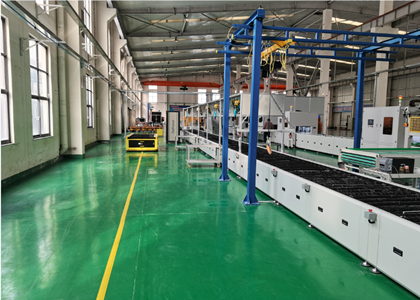
Full Details of Establishing an Energy Storage Production Factory
This document covers the complete construction process of a lithium energy storage factory, focusing mainly on energy storage PACK assembly lines (excluding cell manufacturing). It includes approval procedures, clean workshop standards, automatic production lines, safety systems, manpower planning, investment budget, and project schedule. The total construction cycle is approximately 12–18 months for a new greenfield project. The investment intensity is about 50–80 billion RMB/GWh (cell + PACK) or 25–35 million RMB/50MWh for standalone PACK production.
1. Project Positioning & Capacity Planning
Application Scenarios: Utility-scale energy storage power stations, commercial & industrial energy storage, residential storage, UPS and data center backup power
Cell Chemistry: Lithium Iron Phosphate (LFP) as mainstream solution for long cycle life and low cost; ternary lithium for high-density customized projects
Voltage Levels: Low voltage (48V/200V), medium & high voltage (500V/1000V)
Main Cell Specifications: Large-capacity cells 280Ah / 588Ah (industry mainstream trend)
Minimum Economic Scale: 2–5GWh/year (cell + PACK integrated); 50MWh/year (standalone PACK)
Land Requirement: 5GWh factory ≈ 200 mu; 50MWh PACK factory ≈ 3,000 ㎡
Production Efficiency: 50MWh line outputs 200–220 standard modules per day (2.3kWh per module)
2. Pre-construction Approval & Compliance
1.Project Filing: Feasibility study report & NDRC project registration
2.Environmental Impact Assessment (EIA): EIA report review and official approval
3.Energy Conservation Assessment: Energy consumption audit and energy bureau approval
4.Safety Assessment: Hazardous chemical management, fire protection and explosion-proof review
5.Land & Planning Approval: Land pre-review, construction land permit, engineering planning permit
6.Construction Permit: Construction drawing review and construction authorization
7.Final Acceptance: Fire acceptance, safety facility completion inspection
2.2 Mandatory Certifications for Mass Production
Chinese Standards: GB/T 36276, GB 31241, ISO 9001, ISO 14001, ISO 45001
International Standards: UL 1973, IEC 62619, UN38.3, CE certification
Certification Cycle: 8–14 months (pre-certification recommended in advance)
3. Workshop Construction Standards (Clean & Explosion-proof)
3.1 Overall Layout & Structural Requirements
Building Type: Single-story steel structure (preferred for energy storage factories)
Net Height: ≥ 6.5m (reserved for clean air ducts, fire protection and hoisting)
Floor Load Capacity: ≥ 3 tons/㎡ to support heavy modules and PACK units
Fire Rating: Grade II fire resistance; production area classified as Category C fire hazard; electrolyte room as Category A explosion-proof zone
Cleanliness Level: ISO 8 as baseline; key welding & testing area ISO 7
Temperature & Humidity: 22±3℃, 40%–60% RH (anti-static, anti-condensation)
Anti-static System: Grounding resistance ≤10Ω (optimal 4–8Ω); anti-static floor, workbench and wrist strap system
Logistics Layout: Separated personnel and material flow; one-way production flow: incoming inspection → sorting → assembly → welding → testing → aging → finished product
3.3 High-risk Zone Requirements
Electrolyte Room: Explosion-proof wall, explosion-proof doors/windows, leakage detection, emergency ventilation and automatic cut-off system
Aging & Testing Area: Independent explosion-proof compartment, smoke detection, sprinkler & gas fire suppression system
Hazardous Waste Room: Anti-seepage, independent ventilation and certified waste disposal mechanism
4. Production Line Configuration
4.1 Cell Production Line (5GWh, Investment: 4–5 Billion RMB)
Electrode Process: Mixer, coater, roller press, slitting machine (40% of total equipment investment)
Cell Assembly: Die cutting, winding/stacking, electrolyte injection, sealing
Formation & Grading: Formation cabinet, grading cabinet, OCV testing and cell sorting (20% of equipment investment)
Equipment Precision: Coating tolerance ±0.5%; welding precision ±0.1mm; testing accuracy ±0.1%
4.2 PACK Assembly Line (50MWh/year, Investment: 28–32 Million RMB)
Cell Sorting: Internal resistance & voltage matching, cell inconsistency controlled within ±2%
Module Assembly: Automatic stacking, 3000W+ laser welding, production yield ≥99.9%
PACK Integration: Module + enclosure + BMS + liquid cooling thermal management; torque control error <3%
EOL Final Testing: Charge/discharge test, SOC calibration, 500V insulation & withstand voltage test, communication verification
Smart Logistics: AGV, warehouse management, MES full traceability system
5. Investment Budget Details (2026 Market Standard)
5.1 Standalone PACK Line (50MWh/year, Total: 40–45 Million RMB)
Production Equipment: 28–32 Million RMB
Workshop Renovation (cleanroom, anti-static, fire & explosion-proof): 8–10 Million RMB
Contingency Cost: 12–15% of total budget
5.2 Integrated Cell + PACK Factory (5GWh, Total: 4–5 Billion RMB)
Land: 400 Million RMB
Civil Construction: 150 Million RMB
Production Equipment: 3–3.5 Billion RMB
Utility & Environmental Engineering: 200–300 Million RMB
R&D & Office Construction: 100–200 Million RMB
Working Capital: 500–800 Million RMB
Contingency Fee: 500–800 Million RMB
6. Manpower Allocation (5GWh Factory: 800–1000 Staff)
6.1 Core Management & R&D Team (30–50 Persons)
General Manager, Production Director, Quality Director, Safety Director, Supply Chain & Finance Management; Process Engineers, BMS Engineers, Thermal Management Engineers, Structure & Software Engineers.
6.2 Production Staff (600–700 Persons)
Electrode workshop, cell assembly workshop, formation workshop, PACK sorting, module assembly, PACK integration and testing. Adopt 3-shift 24-hour continuous production mode.
6.3 Qualification Requirements
Welders, electricians, forklift operators and special equipment operators must hold valid certificates; internal auditor certificates for ISO and safety management.
7.1 Thermal Runaway Prevention
Strict cell OCV/IR screening to eliminate micro-short cells
Constant temperature & humidity, dust-free and anti-static environment
Explosion-proof cabin, independent fire suppression and smoke exhaust system
Real-time monitoring of temperature, voltage, current, H₂ & CO gas concentration with early warning mechanism
7.2 Full-process Quality Control
IQC: Full incoming inspection for cells and materials
IPQC: In-process patrol inspection for welding, torque and insulation
FQC: Full inspection for modules and PACKs
OQC: Random delivery inspection before shipment
MES Traceability: Unique ID for each cell/module/PACK for full lifecycle data recording
8. Project Construction Schedule
Preliminary Preparation (1–3 months): Feasibility study, project filing, EIA & safety approval
Design Phase (2–3 months): Factory layout, production line planning, construction drawing design
Construction (6–8 months): Civil works, cleanroom renovation, fire & explosion-proof construction, equipment installation
Commissioning (2–3 months): Single equipment debugging, joint debugging and trial production
Mass Production (1–2 months): Small batch trial run, capacity ramp-up and stable production
Total Cycle: 12–18 months (new greenfield); 8–12 months (old factory renovation)
9. Core Project Risks & Countermeasures
Approval Delay: Advance government communication, parallel processing of EIA and project filing, reserve 3-month buffer period
Safety Hazard: Strict explosion-proof & anti-static design, thermal runaway control, regular safety training and drills
Low Yield Rate: High-precision equipment, stable environment control, standardized process and staff training, target yield ≥98%
Cost Overrun: Reserve 12–15% contingency budget, fixed-price equipment bidding and strict engineering change control