PRODUCT
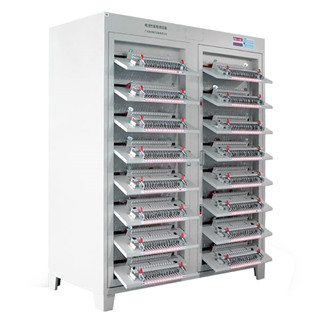
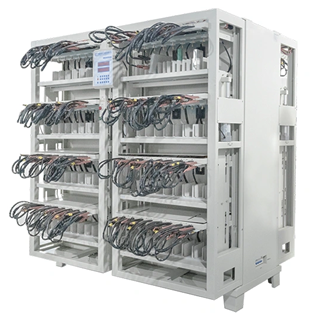
Cell Grading Machine
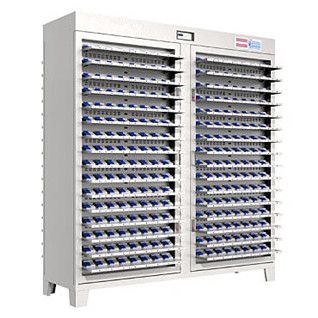
A cylindrical cell capacity grading cabinet is a high-precision automated device specially used in lithium-ion battery production lines to conduct capacity testing, performance grading and screening for cylindrical lithium batteries (such as 18650, 21700, 26650 and other models).
Cylindrical Cell Capacity Grading Formation System
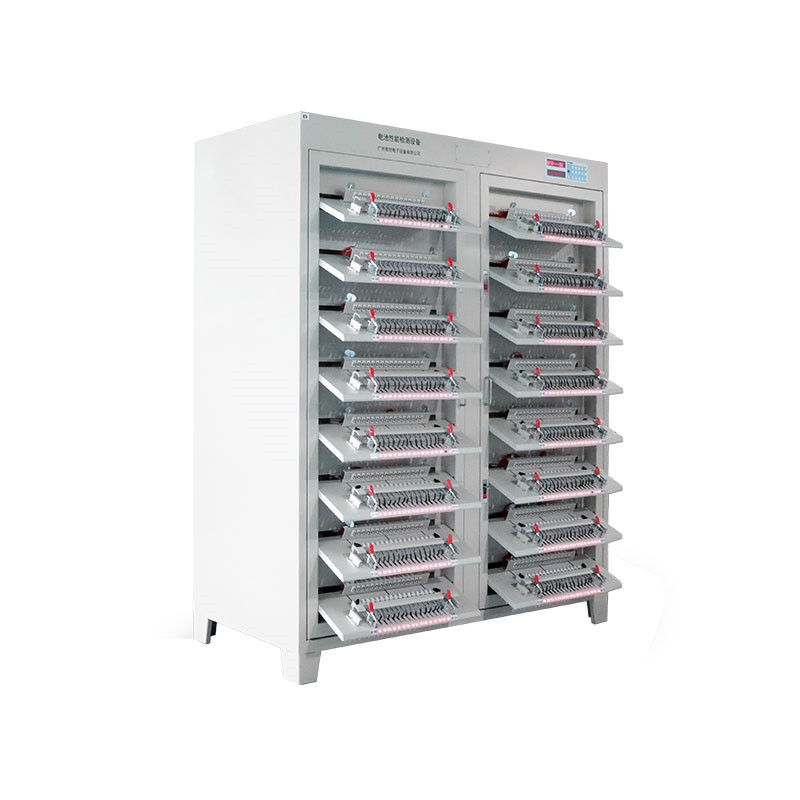
Cylindrical Cell Capacity Grading Cabinet
A cylindrical cell capacity grading cabinet is a high-precision automated device specially used in lithium-ion battery production lines to conduct capacity testing, performance grading and screening for cylindrical lithium batteries (such as 18650, 21700, 26650 and other models).
Core Functions
●Capacity Grading
Accurately measure the actual capacity of cells, and automatically grade them into levels (such as A+, A, B grades) according to actual capacity, internal resistance, voltage and other parameters.
●Screening
Screen out defective products with insufficient capacity, high self-discharge rate, abnormal internal resistance, voltage deviation and other defects.
●Cell Grouping
Provide highly consistent cells for battery packs (Packs), avoid the "barrel effect", and improve the service life and safety of the entire battery pack.
Working Principle and Process
1.Loading and Contact
Cylindrical cells are placed in special trays or fixtures, and the positive and negative electrodes of each cell are accurately connected through upper and lower probes. The equipment is usually equipped with 32/64/96/128/512 independent channels, and each channel is independently controlled and tested.
2.Charge and Discharge Test (Core Process)
●Constant-current constant-voltage (CC/CV) charging: Fully charge the cell in accordance with standard procedures.
●Constant-current (CC) discharging: Discharge at a fixed current to the cut-off voltage.
●Data recording: Collect voltage, current, time and temperature throughout the process, and calculate actual capacity, internal resistance, Coulomb efficiency, self-discharge rate and other indicators.
3.Grading and Data Archiving
Automatically group cells according to deviations in capacity, internal resistance and voltage (e.g. cells with capacity deviation within ±2% as one group). Data is uploaded to the MES system to realize full life cycle traceability of cells.
Structural Features
●Fixture: Upper and lower probe structure suitable for cylindrical cells.
●Power module: High-precision CC/CV power supply (voltage accuracy ±1mV, current accuracy ±0.05%).
· Control and acquisition: DSP/embedded system with high-speed sampling at 10ms~1s level.
· Safety protection: Over-voltage, over-current, under-voltage, reverse connection, over-temperature and leakage protection.
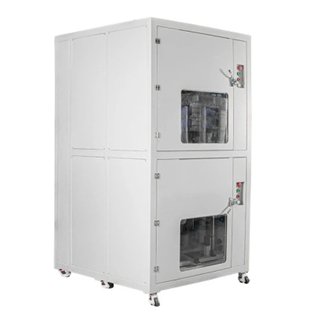
· Temperature control: Often integrated with a thermostat (25±2℃) to ensure test consistency.
Difference from Formation Cabinet
· Formation: The first charge and discharge process to activate cells and form an SEI film, which is a front-end process.
· Grading: Capacity testing and grading after formation, as a final inspection before delivery.
· Integrated Machine: Formation & grading integrated machines are commonly used in the industry to complete the two processes continuously.
Application Scenarios
· Lithium battery manufacturing: Factory inspection and grading of battery cells.
· Battery Pack assembly: Cell grouping for electric vehicles, energy storage systems and consumer electronic battery packs.
· Recycling and maintenance: Screening, recombination and echelon utilization of used cells.
In short, the cylindrical cell capacity grading cabinet is a high-precision tester and sorter for cylindrical lithium batteries, and key equipment to ensure the quality and consistency of lithium batteries.
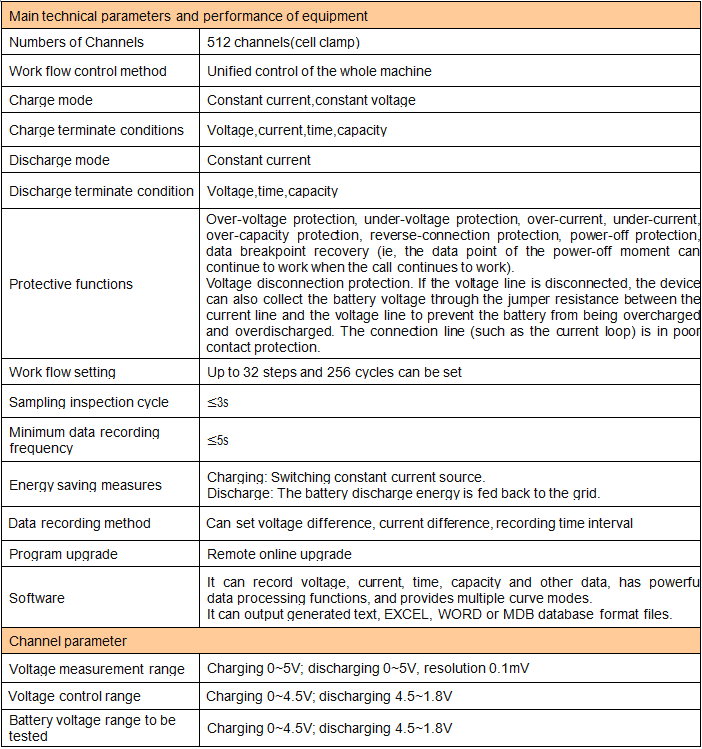
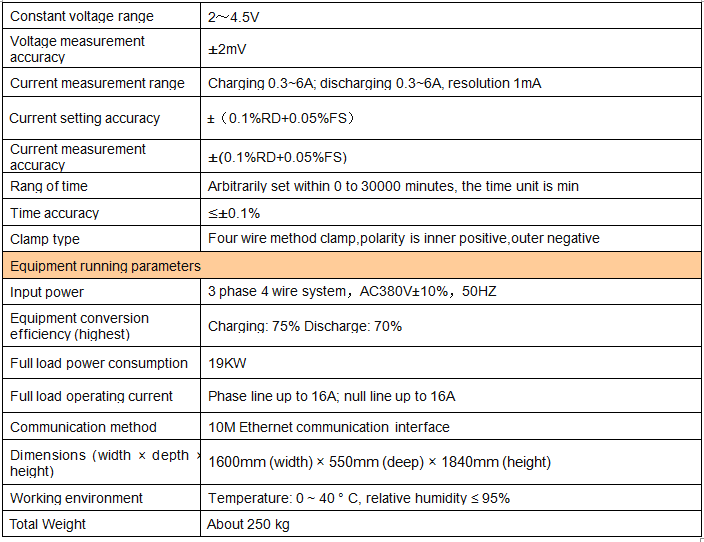
Ⅲ.The main technical parameters