PRODUCT
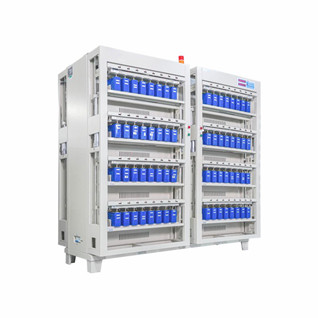
BFGS Grading Machine
1. Capacity Grading
Accurately measures actual cell capacity and grades cells (Grade A/B/C) based on capacity, voltage, internal resistance, and other parameters to ensure pack consistency.
2. Cell Formation
Performs the first charge–discharge cycle on new cells to activate electrode materials and form a stable SEI layer (some models integrate this function).
3. Performance Screening
Eliminates defective cells with insufficient capacity, high self-discharge, abnormal voltage, or out-of-tolerance internal resistance.
4. Cycle Life Testing
Simulates operating conditions to verify cell durability and reliability.
5. Data Traceability
Records full parameters of each cell and binds barcodes for quality tracking.
Working Principle
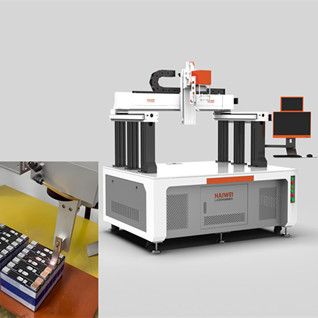
Prismatic Cell Grading & Formation Cabinet
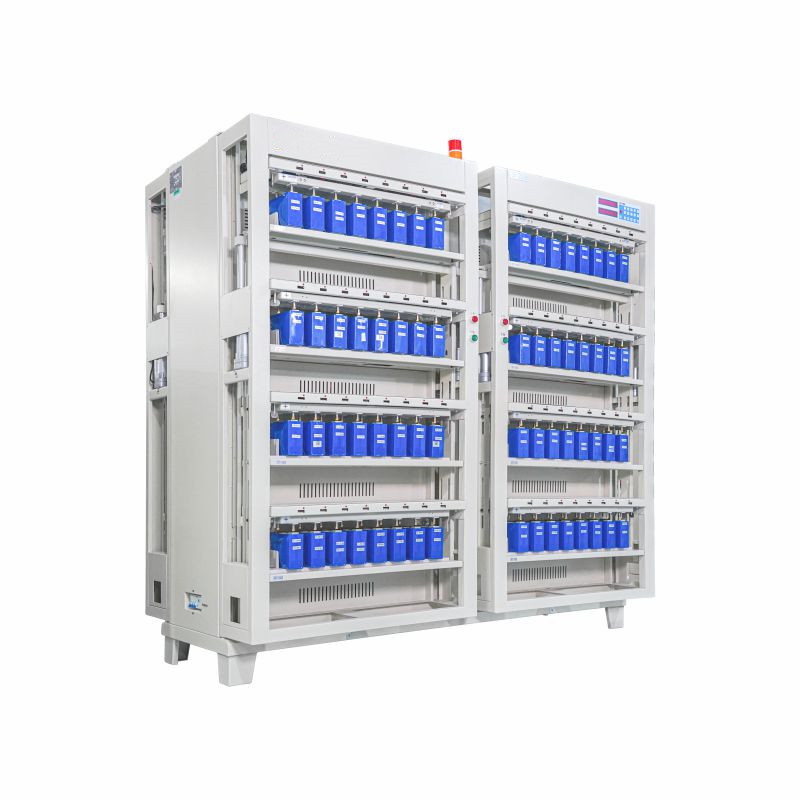
A prismatic cell grading cabinet is high-precision automated charge–discharge equipment specifically designed for prismatic aluminum-case lithium-ion cells in prismatic lithium battery pack production lines. It performs capacity testing, performance grading, formation activation, and aging testing, serving as core equipment to ensure cell quality and consistency for battery packs.
Core Functions
1. Capacity Grading
Accurately measures actual cell capacity and grades cells (Grade A/B/C) based on capacity, voltage, internal resistance, and other parameters to ensure pack consistency.
2. Cell Formation
Performs the first charge–discharge cycle on new cells to activate electrode materials and form a stable SEI layer (some models integrate this function).
3. Performance Screening
Eliminates defective cells with insufficient capacity, high self-discharge, abnormal voltage, or out-of-tolerance internal resistance.
4. Cycle Life Testing
Simulates operating conditions to verify cell durability and reliability.
5. Data Traceability
Records full parameters of each cell and binds barcodes for quality tracking.
Working Principle
1. Load and position cells into adjustable fixtures with probes contacting tabs accurately.
2. Charge cells with constant current/constant voltage (CC/CV) to upper limit (e.g., 4.2V).
3. Rest and cool to stabilize voltage.
4. Discharge cells at constant current to cut-off voltage (e.g., 2.5V).
5. Calculate capacity: Capacity (Ah) = Discharge Current (A) × Discharge Time (h).
6. Collect voltage, internal resistance, temperature, time, and efficiency.
7. Auto-grade cells and judge pass/fail.
Structure & Features
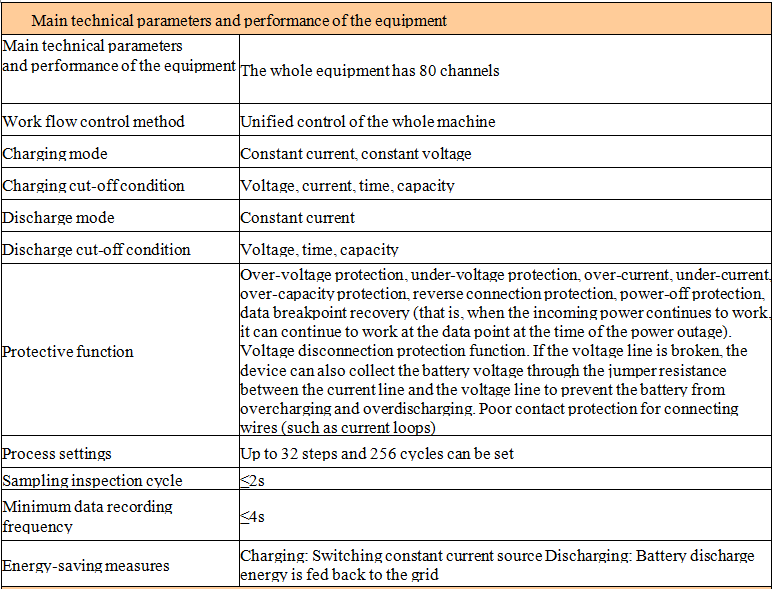
· Multi-channel independent control: 32/64/128/256 channels per unit.
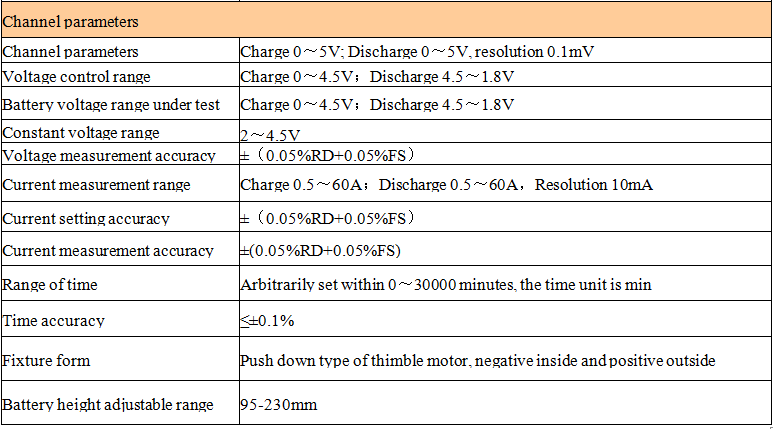
· High precision: voltage ±1mV, current ±0.05% FS.
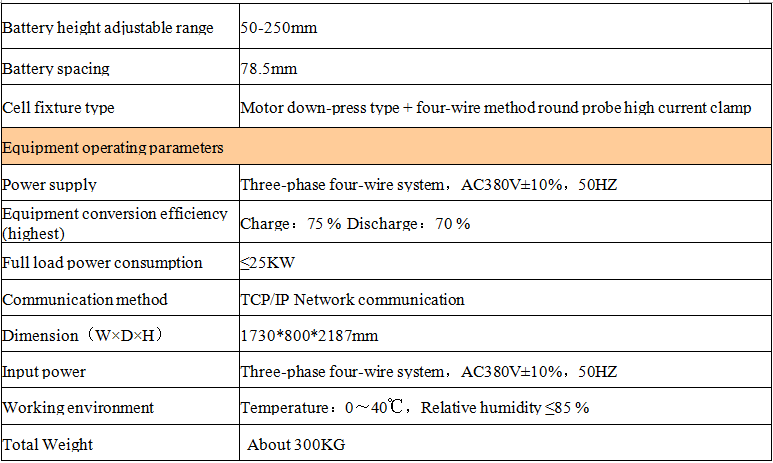
· Prismatic cell compatible: flexible fixtures for various dimensions.
· Energy feedback: discharges energy back to grid, saving over 80% power.
· Intelligent control: PC/PLC programming, MES connection, barcode scanning.
· Safety protection: over-voltage, over-current, over-temperature, reverse connection protection.
Applications
· Power batteries (electric vehicles)
· Energy storage systems (industrial/commercial/household)
· Power tools with high-power prismatic cells
Typical Specifications
· Voltage range: 0–5V
· Current range: 10A/30A/50A/100A/200A/300A
· Channels: 64CH / 128CH / 256CH
· Accuracy: ±0.05% FS
· Communication: TCP/IP, MES, barcode scanning
In short, a prismatic cell grading cabinet acts as a quality inspection and grading center for cells, directly determining ex-factory quality and module service life.
Technical Parameters: