PRODUCT
Hioki Inter Resistance Tester BT3561 China
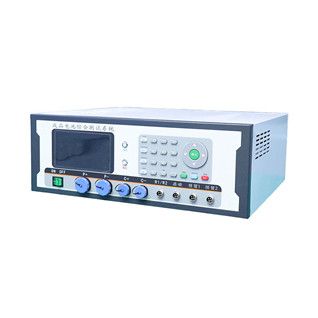
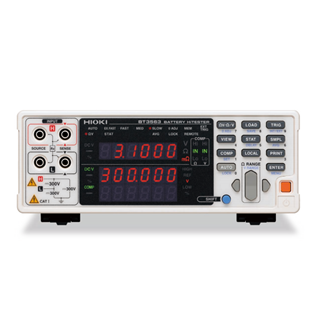
HIOKI BATTERY HiTESTER BT3563, BT3562, 3561
Simultaneous high-speed measurement of internal resistance and battery voltage
From large-cell to high-voltage battery testing - HIOKI is The Choice
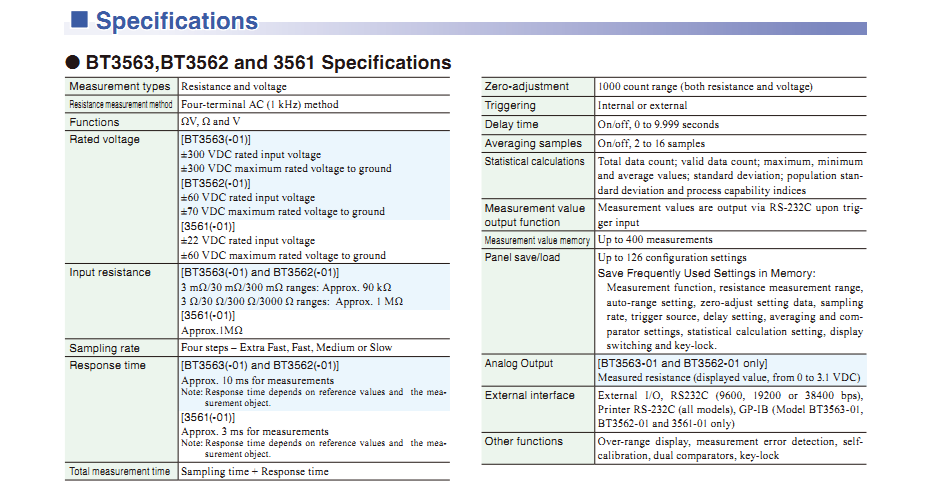
The BT3563, BT3562, and 3561 BATTERY HiTESTERs support simultaneous high-speed measurement of internal resistance (IR) and battery voltage (OCV) for the ever-expanding production lines of increasingly larger lithium-ion low resistance batteries, and other battery packs for high voltage applications.
• Measure high-voltage battery packs up to 300V (with the BT3563)
• Ideal for high-precision cell voltage measurements (accurate to 0.01% of reading)
• Measurement circuitry employs enhanced current regulation
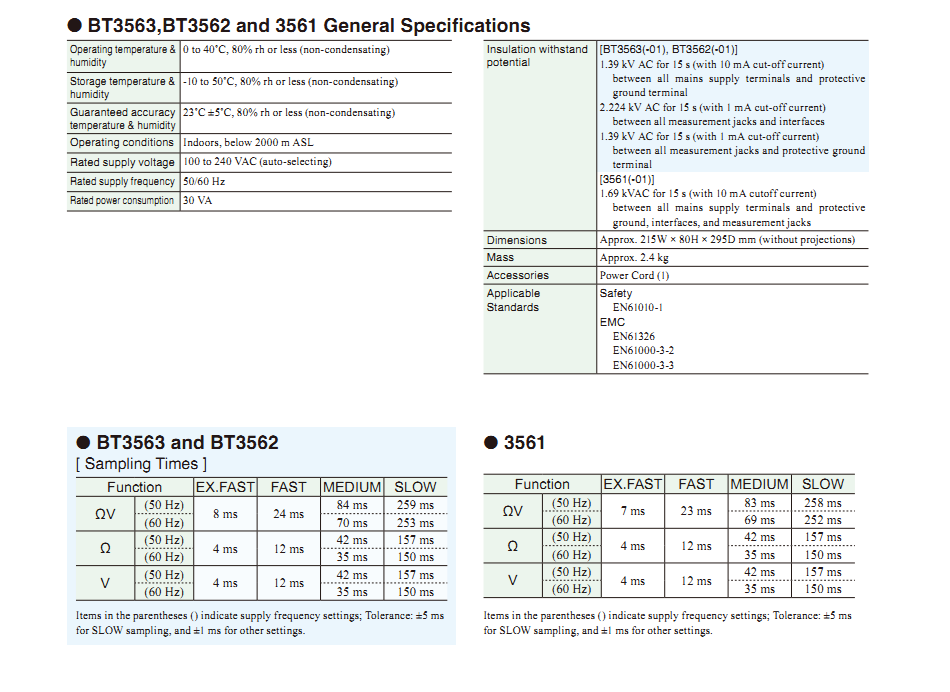
• Fast 10 ms response and 8 ms sampling time for high-speed measurements (with the BT3563 and BT3562)
• Ranges from 3 mΩ to 3000 Ω (with the BT3563 and BT3562) support coin-size to large-cell batteries
2 Resistance and voltage measurements
BATTERY HiTESTER BT3563 BT3562 3561
NiMH
HIOKI 83.1000 300.000
Measurement Parameters Measurement Parameters and Applications and Applications
High-voltage battery pack testing
Battery module testing
Up to
300V
BT3563
Large (low-resistance) cell testing
High-speed mass production testing of coin batteries
Fuel cell stack measurements
Battery research and development measurement applications
Lithium-Ion and Secondary Batteries
Cell phones
E-books Electric bicycles
Electric scooters
EV/HEV
Battery-Powered Devices
Advanced Functions
Four-Terminal AC Method
The four-terminal, 1-kHz AC method uses four contact probes to measure resistance independently of that of the measurement leads.
Self-Calibrating
Minor drift and gain fluctuations within the internal measurement circuitry are automatically corrected to maintain high accuracy.
Measurement Error Detection
Detects test probe contact failure and broken leads, for 100% measurement reliability.
Averaging Function
Stable readings can be consistently obtained by averaging two to 16 measurements.
BT3562
Up to
60V
Voltage measurement ranges: 6V/60V/300V (BT3563) 6V/60V (BT3562)
Resistance measurement ranges: 3mΩ/30mΩ/300mΩ/ 3Ω/30Ω/300Ω/3000Ω
3 Features of Battery HiTester Series
High Precision
Resistance
±0.5% rdg. ±5 dgt.
Voltage
±0.01% rdg. ±3 dgt.
Common to the BT3563, BT3562 and 3561
High Resolution
Resistance: 0.1 μΩ*¹ (3 mΩ range)
Voltage: 10 µV *¹ (6 V range)
1 BT3563 and BT3562
The 3 mΩ range (with 0.1 µΩ resolution) is ideal for testing ever lower-resistance large cells (BT3563 and BT3562). The 6 V range (with 10 µV resolution and 0.01% accuracy) is ideal for the high-precision voltage measurements required for cell testing (BT3563 and BT3562).
Provides high-speed measurement of high-voltage³ battery packs, for improving productivity (BT3563).
*3 BT3563: up to 300 V
BT3562: up to 60 V
Measurement Parameters and Applications — 3561
BATTERY HiTESTER 3561
For high-speed production line testing of small battery packs for mobile and portable communications devices
Up to
20V
3561
For high-speed production line testing of small cells
High-speed 10ms inspection in the 300 mΩ and 3 Ω ranges Improve inspection efficiency during mass production of compact cells
Voltage measurement ranges: 20 V
Resistance measurement ranges: 300 mΩ/3 Ω
Lithium-Ion and Secondary Batteries
Quick Response
Resistance & Voltage
Simultaneous measurements *4 within 10 ms
*4 Sampling time + response time: with EX.FAST sampling 3561
Cell phones
Battery-Powered Devices E-books
Battery HiTester Series Core Capabilities
Quick Response
Resistance & Voltage Simultaneous measurements within 18 ms *2
*2 Sampling time + response time: with EX.FAST sampling BT3563 and BT3562
Measurement Value Storage
Store up to 400 measurement values by external trigger input, for bulk transfer to a computer.
Save Measurement Setting Configurations
Up to 126 measurement configurations such as comparator setting criteria can be saved and reloaded. Saved configurations can be selected by external control.
Statistical Calculations
Apply statistical calculations to up to 30,000 data points to facilitate process and quality control.
High Speed Interfaces
The fastest 10 ms measurement data can be transferred via the standard RS-232C interface at up to 38,400 bps.
Models with the -01 suffix include a GP-IB interface.
Handler Interface
Triggering, measurement configuration loading, and zero adjustment can be externally controlled. Output signals provide comparator results, end-of-measurement events, and measurement errors. (Because the BT3563/BT3652 are different from the 3561, consult each model’s Instruction Manual for specific details or designs.)
BT3563, BT3562 and 3561 External I/O Items