PRODUCT
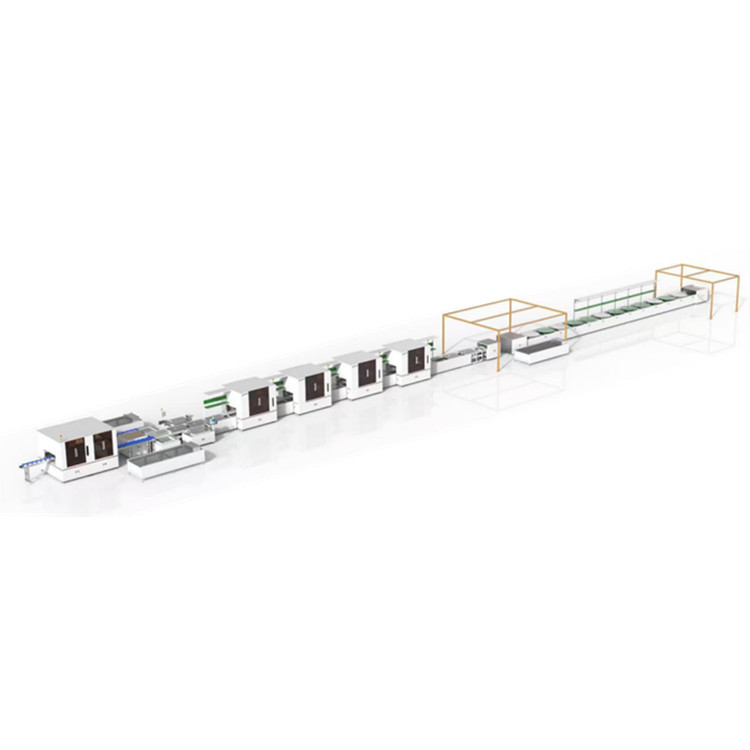
Prismatic Cell To Pack Semi-automatic Assembly Production Line & Solution China
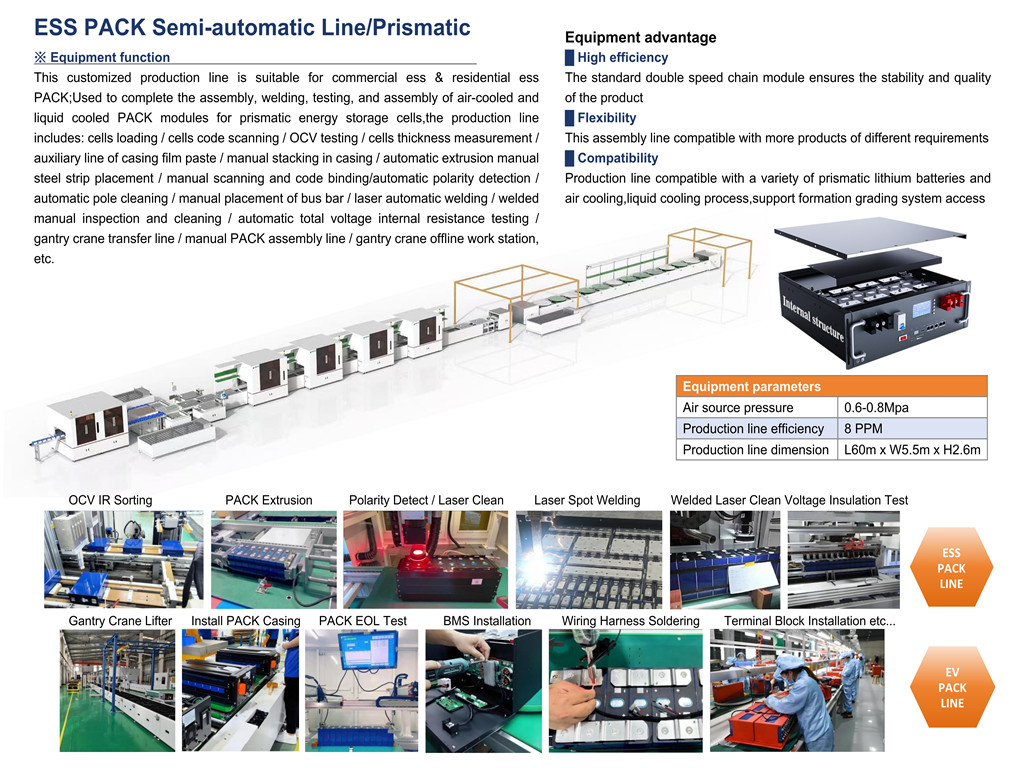
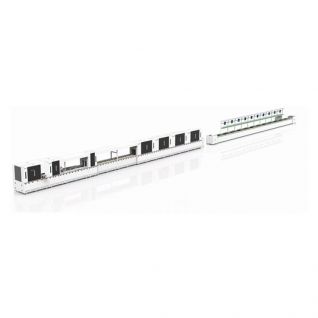
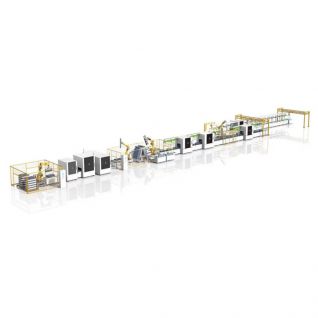
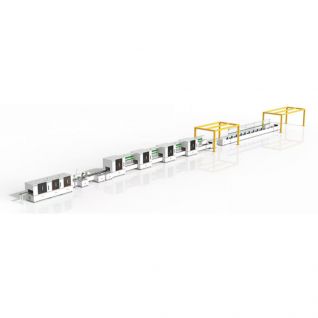
A prismatic cell PACK production line is a specialized manufacturing system that integrates individual prismatic cells (such as energy storage prismatic shell cells and power prismatic cells) through automated processes, combined with structural components, electrical components, BMS (Battery Management System), and other parts, ultimately assembling them into battery packs (PACKs) with charging and discharging functions that meet specific voltage/capacity requirements.
Prismatic Cell PACK Production Line
A prismatic cell PACK production line is a specialized manufacturing system that integrates individual prismatic cells (such as energy storage prismatic shell cells and power prismatic cells) through automated processes, combined with structural components, electrical components, BMS (Battery Management System), and other parts, ultimately assembling them into battery packs (PACKs) with charging and discharging functions that meet specific voltage/capacity requirements. Its core is to realize the "series-parallel combination" and "system-level integration" of cells, transforming scattered cells into standardized battery products that can be directly applied in end-use scenarios.
Core Functions
Due to their regular structure (cuboid shape) and standardized dimensions (e.g., 148×207×50mm), prismatic cells are more suitable for automated assembly. The core goals of their PACK production line are:
Achieve target voltage (e.g., energy storage PACKs often require 500-1500V) and capacity (e.g., 100-1000kWh) through series-parallel connection of cells;
Integrate functions such as structural protection (casings, brackets), thermal management (liquid cooling/air cooling systems), and safety control (BMS, fuses);
Ensure the consistency, safety, and reliability of battery packs to meet the requirements of end-use scenarios (e.g., new energy vehicles, energy storage stations).
Core Process Flow (Taking Energy Storage Prismatic Cell PACK as an Example)
The process of a prismatic cell PACK production line can be divided into four key stages: cell preprocessing, module assembly, PACK final assembly, and testing & verification, each adapted to the rigid structure and large-scale needs of prismatic cells:
1. Cell Preprocessing: Ensuring Basic Consistency
Cell Sorting: Single prismatic cells are screened for parameters using high-precision sorters (equipped with voltage, internal resistance, and capacity detection modules). They are grouped by capacity (deviation ≤1%) and internal resistance (deviation ≤5%) to avoid the "barrel effect" (premature degradation of a single cell due to differences). Thanks to their regular dimensions, prismatic cells can be batch-loaded and tested via automated grippers.
Cell Cleaning and Shaping: Cell poles are cleaned with laser or plasma (to remove oxide layers and ensure welding conductivity); cells with slightly deformed casings are reshaped (prismatic cell casings are metal, which may slightly deform during transportation and need to be calibrated within ±0.1mm).
2. Module Assembly: Core Stage of Cell Series-Parallel Connection
A module is a "sub-unit" formed by series-parallel connection of multiple cells (e.g., 10 cells in series form a module with a voltage of approximately 30-40V), and is a core component of prismatic cell PACKs:
Cell Stacking/Arrangement: Prismatic cells are arranged in a fixed direction (vertical or horizontal) according to design (e.g., 16 series and 8 parallel) using positioning fixtures to ensure uniform spacing (deviation ≤0.5mm), preventing extrusion or loosening between cells.
Connecting Tab Welding: Adjacent cells' positive and negative poles are welded via copper/aluminum connecting tabs using laser welding machines (specifically for prismatic cell metal poles) to form series-parallel circuits. Welding must ensure weld penetration (≥0.3mm) and conductivity, while avoiding weld spatter damaging the cell casing. In some scenarios (e.g., low-voltage energy storage), bolt connections (detachable for maintenance) are used, but with lower automation efficiency than welding.
Module Testing: The total voltage, internal resistance, and welding strength of connecting tabs (tensile test ≥50N) of the module are tested to ensure no cold solder joints or short circuits.
3. PACK Final Assembly: System-Level Integration
Multiple modules are integrated with external components into a complete battery pack:
Module Casing: Multiple qualified modules are placed into the battery pack casing (metal or flame-retardant plastic) according to the design layout (e.g., stacked vertically, arranged horizontally) and fixed with bolts or clips. The casing must adapt to the dimensions of prismatic modules and reserve thermal management channels.
Harness and BMS Assembly: High-voltage harnesses (copper bars) between modules, low-voltage signal lines (for collecting cell voltage/temperature) are connected, and the BMS (Battery Management System, responsible for monitoring, balancing, and protection) is installed. The regular structure of prismatic PACKs makes harness routing easier to standardize.
Thermal Management System Integration: Liquid cooling plates (attached to the side or bottom of modules, adapting to the planar contact of prismatic cells) or air cooling ducts are installed as needed, with liquid/gas inlets and outlets connected to ensure uniform operating temperature of cells (temperature difference ≤5℃).
4. Testing & Verification: Comprehensive Performance Detection
Air Tightness Testing: The sealed battery pack undergoes helium mass spectrometry leak detection (leakage rate ≤1×10⁻⁶Pa·m³/s) to prevent moisture or dust intrusion in energy storage scenarios.
Charge-Discharge Testing: The battery pack is fully charged and discharged using a high-power charge-discharge cabinet to verify total capacity, voltage platform, and initial cycle performance (e.g., first charge-discharge efficiency ≥95%).
Safety and Function Testing: Simulating abnormal conditions such as overcharge, over-discharge, and short circuit (BMS must trigger protection); testing BMS communication functions (docking with external devices) and heat dissipation efficiency of the thermal management system.
Appearance and Labeling: AI visual inspection ensures no scratches on the casing and no loose harnesses; finally, specification labels (voltage, capacity, serial number) are attached.
Core Equipment and Characteristics
Key Equipment:
Preprocessing: High-precision cell sorters (supporting batch testing of prismatic cells), laser cleaning machines;
Modules: Automated cell stacking robots (adapting to prismatic cell dimensions), pole laser welding machines (with online weld inspection);
Final Assembly: Module handling robots, BMS automatic screw locking machines, liquid cooling system assembly lines;
Testing: Helium mass spectrometry leak detectors, high-power charge-discharge testing systems (supporting voltages above 1000V).
Process Characteristics:
High Automation: The regular dimensions of prismatic cells are suitable for robotic gripping and positioning, with a single line automation rate reaching over 90% and high mass production efficiency (e.g., energy storage PACK lines can produce 10-20 units per hour);
Structural Stability: Prismatic cells' rigid casings combined with metal connecting tab welding give modules better vibration and impact resistance than pouch PACKs (e.g., meeting ISTA 3A transportation standards);
Controllable Consistency: Cell sorting and automated welding reduce human errors, with the voltage difference between cells in the battery pack controllable within 5mV;
Adaptation to Large-Scale Scenarios: Modular design supports flexible expansion (e.g., increasing the number of modules to boost capacity), suitable for large-capacity scenarios such as energy storage stations (MW-level) and commercial vehicles.
Application Scenarios
Products from prismatic cell PACK production lines are widely used in:
New energy vehicles (passenger cars, commercial vehicles, with power prismatic cell PACKs);
Electrochemical energy storage (large-scale energy storage stations, industrial and commercial energy storage cabinets, with energy storage prismatic cell PACKs);
Special equipment (forklifts, ships, with high-voltage prismatic PACKs), etc. It is a key link connecting "cell production" and "end-use applications."