PRODUCT
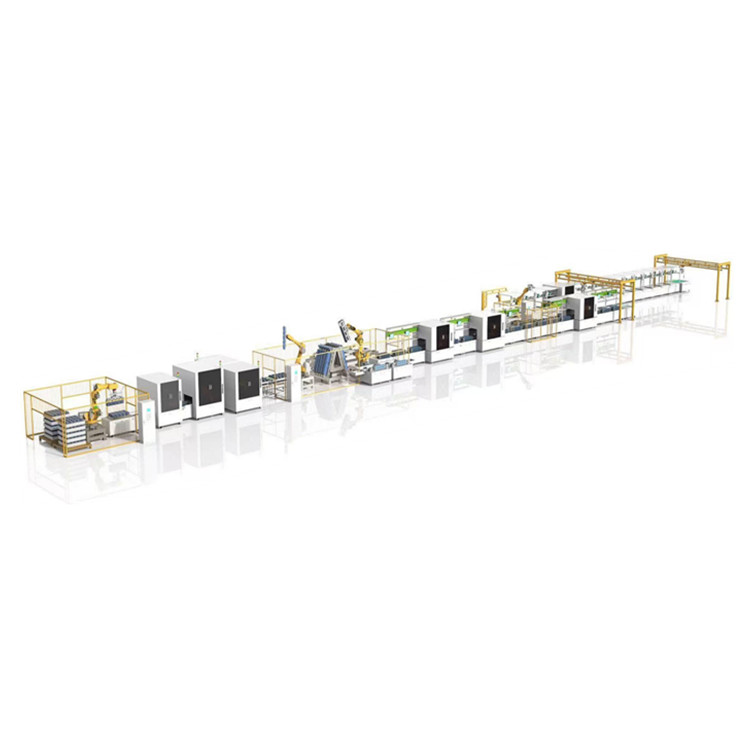
ESS Energy Storage System Pack Automated Assembly Line PACK Manufacturing Solution China
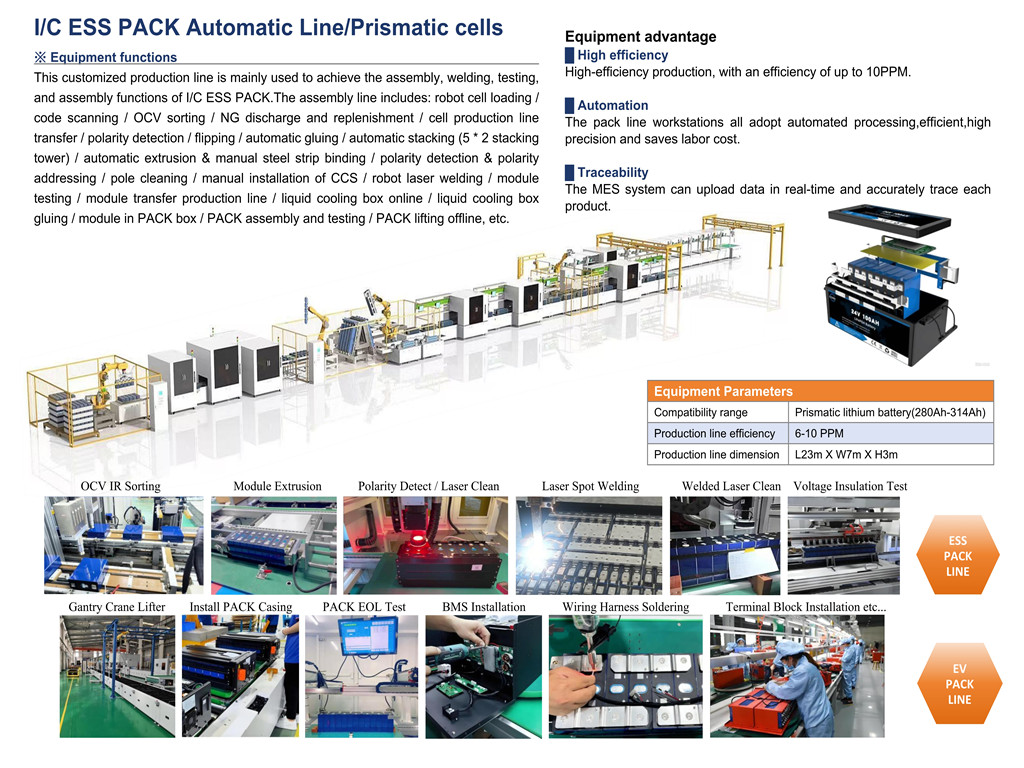
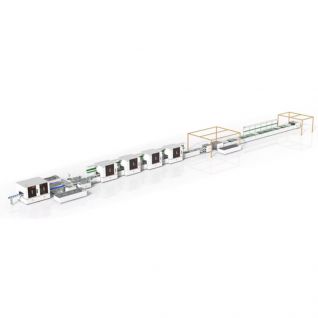
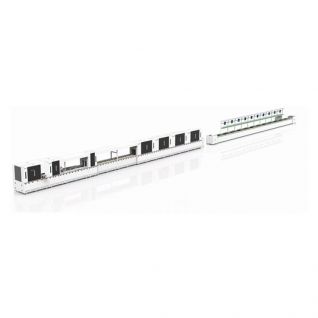
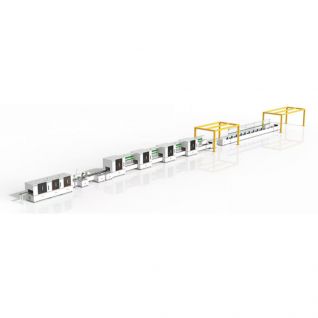
A fully automatic production line for energy storage battery PACKs is an unmanned, intelligent mass-production system designed for energy storage scenarios (such as large-scale energy storage stations, industrial and commercial energy storage, and household energy storage).
Fully Automatic Production Line for Energy Storage Battery PACK
A fully automatic production line for energy storage battery PACKs is an unmanned, intelligent mass-production system designed for energy storage scenarios (such as large-scale energy storage stations, industrial and commercial energy storage, and household energy storage). It realizes fully automated, human-intervention-free production from individual cells to finished energy storage battery packs (PACKs) through highly integrated automated equipment, digital control systems, and AI algorithms. Covering cell screening, module assembly, system integration, and performance testing, it ultimately produces energy storage battery packs with high capacity, long cycle life, and high safety, meeting the core requirements of energy storage scenarios for "large capacity, long lifespan, and high reliability."
Core Positioning: Distinction from Consumer/Power Battery PACK Lines
The key differences between energy storage battery PACKs and those for consumer electronics or power batteries lie in:
Energy storage PACKs require large-scale series-parallel connections (e.g., hundreds of cells in series and dozens of modules in parallel, with voltages exceeding 1000V and capacities reaching MWh levels), demanding extremely high cell consistency and system stability;
They must meet ultra-long cycle life (≥3000 cycles, up to 10,000 cycles in some scenarios) and wide temperature range operation (-30℃~60℃);
Safety redundancy requirements are stricter (must pass extreme tests such as extrusion, and high-temperature fire).
Thus, the fully automatic production line for energy storage battery PACKs is specially designed for these needs in terms of process precision, testing standards, and equipment compatibility.
Core Process Flow (Fully Automated Closed Loop)
The production line aims for "zero human intervention," achieving a fully closed-loop process through robots, visual guidance, and sensor linkage. Key stages are as follows:
1. Intelligent Cell Sorting and Preprocessing (Foundation of Consistency)
Fully Automatic Loading: AGV robots transport cell bins to a depalletizer, and vacuum suction robotic arms pick cells in sequence, with visual positioning correcting their posture (deviation ≤±0.1mm).
Multi-Dimensional Sorting: AI vision systems inspect cell appearance (casing scratches, pole oxidation); high-precision testers synchronously collect voltage (deviation ≤2mV), internal resistance (deviation ≤3%), capacity (deviation ≤1%), and cycle attenuation rate (data from 10 pre-cycles). Cells are grouped via algorithms (parameter differences within the same group ≤0.5%) to avoid the "short-board effect" in subsequent series-parallel connections.
Preprocessing: Laser cleaning of poles (removing oxide layers to improve welding conductivity) and dust removal from cell casings, with data uploaded to the MES system in real time for archiving.
2. Fully Automated Module Assembly (Integration of Energy Units)
Modules are "energy sub-units" of energy storage PACKs (e.g., 16S8P forming a 51.2V/280Ah module). Automated assembly balances efficiency and reliability:
Cell Stacking/Arrangement: Based on capacity requirements, robots arrange sorted cells into groups according to preset schemes (vertical/horizontal), with flexible fixtures (silicone material) securing them to avoid damage from hard contact (energy storage cells are mostly prismatic hard-shell, with pressure-resistant casings that require deformation prevention).
Pole Connection:
High-voltage modules (e.g., for vehicle-mounted energy storage) use laser welding: Robots hold laser heads to weld poles to copper-aluminum composite connecting tabs along trajectories, with weld width 0.3-0.5mm. Weld depth is monitored in real time (≥0.4mm), and post-weld visual inspection checks for cold solder joints or missing welds;
Low-voltage maintainable modules (e.g., household energy storage) use fully automatic bolt connection: Servo screwdrivers lock bolts to preset torque (e.g., 8-12N·m) with torque deviation ≤±5%, and anti-loosening marks are automatically identified.
Module Testing: Robots transfer modules to testing stations, where automatic probe docking tests total voltage and internal resistance, and tensile tests verify connection strength (≥80N). Unqualified modules are automatically diverted to rework lines.
3. PACK System Integration (Full-Function Integration)
Multiple modules are integrated with structural components, thermal management systems, and BMS to form complete energy storage battery packs:
Module Casing and Fixing: AGVs transport modules to the final assembly line; multi-axis robots hoist modules into metal casings (IP65 protection rating) via 3D positioning. Automatic screwdrivers lock fixing bolts (spacing error ≤±1mm) to ensure close contact between modules and casings (for efficient thermal conduction in thermal management).
High-Voltage/Low-Voltage Harness Integration: Robots automatically plug in high-voltage copper bars between modules (with foolproof design) and low-voltage signal lines (for temperature/voltage collection). Harness routing is fixed along preset paths (to prevent vibration-induced wear), with post-connection visual inspection verifying proper insertion.
BMS and Thermal Management Assembly: Automatic screwdrivers fix BMS motherboards (supporting CAN/485 communication, compatible with energy storage dispatch systems); liquid cooling plates (or air cooling ducts) are attached to module sides/bottoms via robots, with automatic docking of liquid inlets/outlets (leakage rate ≤1×10⁻⁸Pa·m³/s via sealing tests).
4. Comprehensive Testing and Calibration (Reliability Verification)
Testing stages far exceed those for ordinary battery packs to meet strict energy storage requirements:
Electrical Performance Testing: High-voltage charge-discharge cabinets simulate energy storage conditions (0.2C-1C charge-discharge) to test total capacity, voltage platform, and charge-discharge efficiency (≥95%). BMS balancing function is verified (single cell voltage difference ≤5mV).
Safety Limit Testing: A subset of sampled products undergoes automated tests such as needle penetration (Φ5mm steel needle), extrusion (100kN force), and high-temperature (85℃) cycling, monitoring for fire or explosion (energy storage standards require "no open flame, no explosion").
Long-Term Cycle Calibration: Samples undergo 100-cycle tests (simulating actual use) to record capacity attenuation rate (≤2%), with data fed back to the MES system for process optimization.
Environmental Adaptability Testing: High-low temperature chambers simulate -30℃~60℃ operating environments to test charge-discharge stability, ensuring normal operation in extreme climates.
5. Intelligent Warehousing and Logistics (Full-Process Traceability)
Qualified PACKs are automatically labeled (with unique QR codes linking cell batches, process parameters, and test data) and transported to automated warehouses by AGVs. The WMS system dispatches them for delivery based on order requirements.
Key Technical Highlights
Full-Process Digital Twin: The MES system real-time collects equipment parameters (e.g., welding current, tightening torque), cell data (capacity, internal resistance), and test results to build a digital twin model. It enables traceability of the full life cycle data of any PACK, supporting process optimization.
Flexible Adaptability: By quickly replacing fixtures and one-click parameter calling, the line can compatible with PACKs of different capacities (100kWh-2MWh) and cell specifications (e.g., 280Ah, 302Ah prismatic cells), with switchover time ≤30 minutes.
Safety Redundancy Design: The production line incorporates multiple foolproof mechanisms (e.g., pole reverse connection detection, voltage abnormality alarms) and fire-extinguishing devices in welding/testing stages (for electrolyte leakage risks), complying with energy storage safety standards such as UL94 and IEC62133.
Ultra-High Mass Production Efficiency: A single line can achieve 5GWh/year capacity (approximately 5,000 1MWh energy storage PACKs), with a takt time ≤15 minutes per unit, meeting the large-scale expansion needs of the energy storage industry.
Application Scenarios
It directly supplies core battery packs for large-scale wind-solar supporting energy storage stations (GW-level), industrial and commercial energy storage cabinets (100kWh-1MWh), and household energy storage systems (5-20kWh). It is a key mass-production carrier linking "cell production" to "end applications" in the energy storage industry, supporting low-cost, high-reliability large-scale deployment of the global energy storage market.